Get Familiar: Stapelgang
Get Familiar: Stapelgang
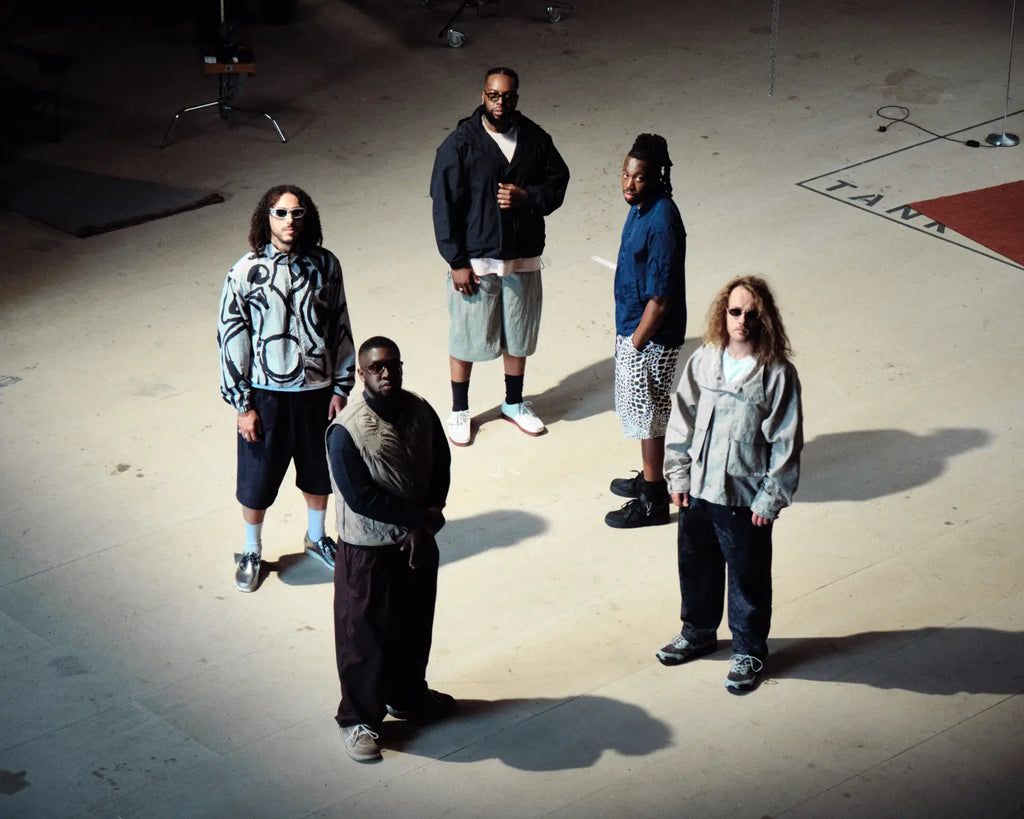
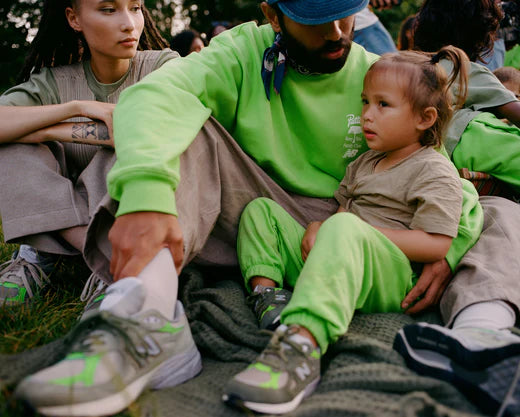
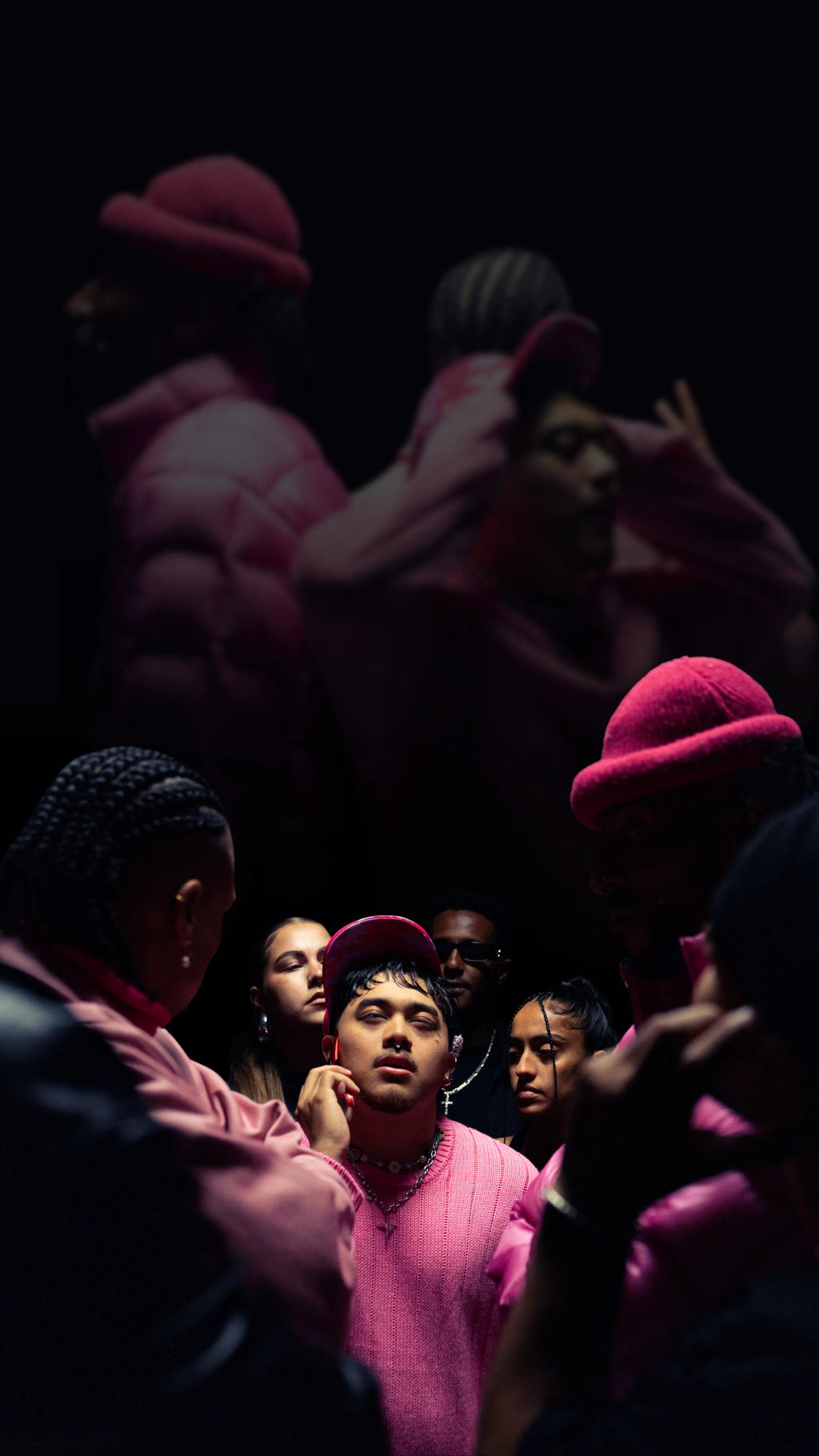
Interview by Passion Dzenga and Liesje Verhave | Photography by Sam Vanacker and Lowie van der GrintenThere is something fitting about Stapelgang taking their name from a street. What began as a group of friends from dance school gathering to listen to music, exchange references and talk about the details hidden inside the songs they loved has gradually developed into something much larger: a musical project, creative community and shared language built from years of moving, listening and working alongside one another.Formed around 2018, Stapelgang grew from friendships established through dance, but the group were never interested in remaining within a single discipline. Music, performance, production, theatre, DJing and visual culture all became part of the same creative vocabulary. Even their name has come to reflect that approach. A stapel is a pile or stack: something built by placing one thing on top of another. For Stapelgang, every experience becomes another layer. Knowledge picked up through dance feeds into music; theatre informs the live show; friendship shapes the studio; and the wider community around them continues to influence what the group can become.Now operating as the trio of Gary “Duimalot” Gravenbeek (vocalist), Jeffrey “Jackson” Loewenicht (producer) and Skeyenno “Kiddy” Talany (vocalist), Stapelgang are pushing that philosophy further with their self-titled EP. Developed through intensive writing camps, tiny rooms, ageing laptops and an instinctive creative relationship years in the making, the project captures a group learning how to turn the chemistry of friendship into something more deliberate without losing the spontaneity that made it exciting in the first place.Following the release of their EP, Stapel, we sat down with the group to talk about growing from dancers into musicians, learning to work professionally with your closest friends, making something from very little, building a live world around their music and why the people surrounding Stapelgang remain just as important as the three standing at its centre.You all knew each other through dance before Stapelgang existed. How did that friendship eventually become a musical project?Gary: Stapelgang started around 2018. We were a group of friends and most of us came from the dance academy, so there was already this whole family surrounding what we were doing. We would have nights where we came together, listened to a lot of music, shared music with each other and really talked about how it made us feel and all the different layers within it. I think that was when the depth of what we were doing together, beyond dancing, really started coming into the room. We started investigating what all of this meant to us individually and what it could mean collectively.At that point there were five of us, including Evan “N4VY” Blaaser - Lumen Atlas and Okke “Orka” Pieters. One night we were outside in Amersfoort and took a picture on this little street called Stapelgang. From there it became “gang”. But the idea of a stapel — putting things into a pile — actually ended up describing us really well. Everything we learn from other work, whether that's theatre, acting, performing or dancing, gets put back into the pile. All of that information comes back into Stapelgang.Jeffrey: We were schoolmates, classmates and dance mates, so our relationships had already developed across all these different layers. That made our connection through music stronger too. Some of us were DJing, some were interested in beats and production, and eventually all of those elements started coming together. We developed a language where somebody can say, “Can you make it more like this?” and we know what they mean because we already understand how the other person experiences music.As dancers, you're embodying the music. Now we're making the music. Those things are connected because you're already trained to recognise what you're looking for emotionally.Was there a clear moment when you decided to start making music, or did it simply become another extension of the way you already related to sound?Kiddy: I think it all comes down to loving music. Dance is one aspect of that love, but there is another realm of enjoying music where you're actually making it. For us, those things add to each other. They're different sides of the same coin.Dance was really the first layer. A lot of us were already interested in how music was made, but dance brought us close together and taught us how to enjoy and analyse music together. Eventually the question became: how do we actually make the kind of music that makes us feel this way? Then suddenly we're vocalists, we're making beats and we're all sitting together in this tiny room that's way too hot with way too many people inside it.Gary: I don't even think there was one real starting point. Some of us grew up around music through our parents, and I was already a vocalist before I seriously started dancing. We were all so obsessed with finding music and listening to SoundCloud beats that eventually somebody had to take the next step and start making it themselves.Because we came from dance, we'd also been exposed to a lot of really high-quality music, so our ears were already slightly spoiled. When you begin producing, you immediately know the thing you're making could be better. You're not necessarily ashamed of it, but you understand that you're still in a process.We'd also worked together creatively before Stapelgang properly became a musical project. We choreographed a performance for the National Theater and had to create music for it, which taught us a lot about how we function professionally. Being friends is one thing; actually being responsible for something together is completely different. By the time we started doing proper studio sessions and writing camps, it didn't feel like we were suddenly jumping into something completely new. We already knew quite a lot about how each other worked.Friendship and working relationships don't always translate easily. How have you learned to work professionally together without losing what made you friends in the first place?Jeffrey: It happened quite organically because we know each other's strengths and we're also aware of each other's weaknesses. I know what I can expect from Gary during a certain part of the day, and I know when his concentration is gone and it's time for me to go to Kiddy instead. You learn each other's rhythm in the room.We've also all worked professionally outside of Stapelgang. We've had our own experiences with companies, groups, theatre and other projects, so we understand what it means to work professionally. We didn't need to spend years discovering basic things about one another before we could actually start creating.Kiddy: The years of friendship matter because we've spent years listening to music together and discussing why a sound hits for one person but maybe doesn't hit for somebody else. After enough of those conversations, you almost start living inside each other's brains.When we're working now, sometimes we only need to look at each other. Somebody can use one metaphor and suddenly everybody understands what needs to happen. We've officially been working together on music for a few years, but in another sense we've been developing this sound and this communication for much longer than that.Gary: And the community around us is part of that too. We're the three people stepping forward now saying, “We're Stapelgang,” and that's true, but the people around us have also been involved in this research. They've listened to music with us, talked about music with us and worked on projects with us.When we did the campaign shoot, for example, there were a lot of friends working on it. Everybody already understood each other's expectations. In some ways, we've already done the work because we've spent so many years learning how the people around us operate.Your self-titled EP came out of writing camps rather than a rigid concept. What were you trying to discover when you began making it?Jeffrey: It started with a writing camp in 2025 that was connected to one of my development projects. Part of my research was about producing, and I already knew Gary and Kiddy were making music individually, so I wanted to invite them into the project.We went into it completely blank. Whatever happened, happened. We knew there were certain colours we were attracted to. We wanted things that sounded cinematic, but we also wanted things that felt raw. Once we were in the room, the direction became clearer.That's basically what the EP represents. It's all of our tastes coming together and what happened between us in that room. There wasn't a meeting where we planned exactly what the project needed to sound like. Somebody would hit the first piano chord and we'd suddenly know: okay, it has to go this way.What were those writing camps actually like? Was getting away from your normal environment important to making the project?Gary: We did two writing camps. The first was almost like being at a Center Parcs-type holiday situation, except we genuinely went there to work. I have to give Jeffrey props for that because writing camps can easily turn into partying and messing around, but we really went in. We'd sleep two or three hours and then go straight back into that little room.The first camp was really about making whatever we felt. Megan was there to take photo’s, Joshua was there to cook the food, and there were people around us who were already friends but who were also there because they're professionals at what they do. That distinction was important. You can be friends and still take each other's craft seriously.The second camp was a little harder because we deliberately tried something different and invited other people in. But both experiences taught us about the conditions we need to make the music hit as hard as possible. Even small things matter. There was catering. Things were organised. We weren't living off instant noodles and turning every night into a party. We ate well and we worked.You've spoken about making music in tiny rooms and sometimes working without ideal equipment. Has limitation become part of the Stapelgang process?Kiddy: Technology might genuinely be our biggest enemy sometimes. When it doesn't work the way you want it to, it can slow everything down. But besides that, these are the people I want to work with for the rest of my life.Jeffrey: We've learned how to work with less. Sometimes all we have is a laptop. My laptop is seven years old now, so it definitely has its moments. The sound treatment hasn't always been right either. But we learned how to ask: if we don't have professional equipment, how do we still make this sound professional? How do we get everything possible out of what we have?That taught me something important about these guys and everybody around us. We don't need to have everything. Whatever we do have, we're going to get the most out of it. Of course, sometimes you just want the great studio, the great microphone and the great laptop. But learning without those things means that when they're finally there, we know what to do with them.Kiddy: That's probably where we shine most. We've always been used to creating something out of nothing. That's part of dancing and it's part of our friendship. Those environments can be difficult, but they're also where we thrive.There is a huge amount of energy around Stapelgang. How much of that comes from the fact that you're creating alongside people you genuinely trust?Gary: The energy feels normal to us. Dance definitely has something to do with it, but I think the bigger thing is feeling safe enough to explore and have whatever outlet you need. Those things create a space where you can do whatever you want.We've worked hard, and my motivation now comes from feeling like everything is possible because I'm working with my friends. I'm really close to them. That's something I want other people listening to us to feel as well: find your people and make something together.That's also part of why we want the music to be something everyone can tap into. I want people to hear what we're saying, find their own clique and move. When I'm standing onstage and I look behind me and see Jeffrey and Kiddy, I explode. That's all I ever wanted. I think everybody deserves to find their own version of that, whatever their lane might be.“FC Stapel” feels like one of the clearest examples of that community becoming visible. How did the track and its visual world come together?Kiddy: We were asked to make an anthem for a dance festival “Freedom City” in Utrecht. Raymond “Baba” Ramdihal, who runs the event, is also a friend of ours. That's what made it special: he's doing his thing by organising an event, we're doing ours, and then those worlds can meet.It gave us the opportunity to work with people like Daring “G” Guermonprez, Arif Gusejnov - Sound Masters Academy, Roy “Royal”, Megan Jane Simons, Trak Studios, Sansho Weynschenk, Jochem van der Velden, Gogo Lupin, Lowie van der Grinten - Lowiegraphy, Macy Sarinah, Joshua Bagano - Shempreh and Elsemieke van Essen. It became another stapel, another pile of different people, but everything still came from the source of who we are.The song itself was funny because we spent two or three days making completely different tracks. We were deep in the process, but nobody was saying anything. Eventually I just told everyone, “I'm not going to lie, I'm not feeling this.” Everybody looked at me like, “Yep. Nobody is.” Then we started again. Jeffrey made the new beat in about five minutes.Gary: We asked him what he actually wanted to make and he basically said: just hip-hop. He found a sample, loaded it in and then we separated. He did his part, we did ours, and suddenly it worked.Kiddy: Then Darin G came in and put his magical fingers on it. After all those days trying to force something, FC Stapel basically just happened.Jeffrey: I think we're free spirits when we're inside the studio. Outside the studio, we're hard workers. But in that freedom, that's where the magic comes from. Some of our songs just happen. When we have too many borders and we're told exactly what something has to be, that's more challenging for us. It's something we're learning, but the songs that arrive organically are often the ones closest to my heart.You all come from theatre and dance, so a Stapelgang performance was never likely to be three people simply standing under a spotlight. What did you want people to experience at the EP release show?Jeffrey: We come from theatre, so we don't want people to simply watch us perform. We want them to experience a moment. There is nothing wrong with just having one light and going raw and rapping, but that represents maybe two percent of who we are.We wanted everything to contribute to the experience: VJing, stage design, outfits and lighting. For me, “Blauwe Vinkjes” was probably my favourite song to perform because everything came together during that track. There was so much happening visually. I'm a very visual person, so when the VJing, lighting and everything else clicked at the same time, I could feel that the whole thing was switched on.Gary: The live setup is important to us because we want it to sound genuinely good as well. We've been working with our own sound engineer and using a MIDI controller within the setup. We play with in-ears and monitors, and then we have the visual stage design around us made by Esmeralda van Kekem — the grass mat, pink objects, blocks, circles. We're still developing it, but we want the technical and visual sides to be taken seriously because the performance isn't separate from the music. It's another part of it.You've built this project through instinct, but you're now talking much more deliberately about organisation and the future. What does the next stage of Stapelgang look like?Gary: This upcoming year is going to involve a lot of focus on the organisational side. We're going to continue releasing singles and keep building the online buzz we're creating now through good music, high-quality videos, funny videos and giving people more depth into who we actually are.We're also looking at fundings so we can plan further ahead instead of constantly reacting. Jeffrey is becoming a father, which means we're thinking seriously about how we can work ahead, unload some of his workload and become more efficient as a group.Kiddy and I are also going to be working together on a theatre performance with two other organisations, which means we're going to be around each other for four months. The plan is to make 32 songs during that period.There's already another single almost ready. It was made during the first writing camp and originally could have been part of the EP, but we decided to leave it off and release it separately.The bigger goal is to create enough music and plan enough of the coming year that we have the headspace to properly develop the organisation around Stapelgang. We want to know who we want to work with, which venues we want to be in, who we need to talk to and where the important moments are going to happen. Then we can plan releases around those moments and make sure the people who need to see us actually see us. It's about building Stapelgang into something where we know exactly what we're doing.For all the talk of releases, writing camps, stage design and future plans, the most important part of Stapelgang might still be the simplest: these are friends who learned how to listen to one another.Long before the EP, they were already building its foundations in dance studios, theatre productions, late-night conversations and sessions spent pulling apart the music they loved. That history explains why so much of their process appears instinctive today. A glance can replace a paragraph. A metaphor can redirect an entire session. After days spent forcing a song that doesn't work, somebody can finally admit it and everybody else immediately understands.That trust extends beyond Gary, Jeffrey and Kiddy. Throughout the conversation, they repeatedly return to the people around them: N4VY and Orka in Stapelgang's beginnings; Megan and Joshua at the writing camps; Raymond and the community behind FC Stapel; and collaborators including Daring G, Arif, Royal, Megan Jane, Trak Studios, Sansho, Jochem, Gogo, Lowie, Macy, Shempreh and Els who helped expand the group's ideas into something larger. Stapelgang may now have three people at its front, but they make it clear that the pile was never built by three people alone.That makes the name feel increasingly appropriate. Every discipline, friendship, limitation, performance and collaboration becomes another thing added to the stack. Nothing has to exist independently when it can feed the next idea.And as Stapelgang move from making music in overcrowded rooms towards a more ambitious live show and increasingly deliberate future, they don't seem interested in abandoning the conditions that first made the project work. The equipment can improve. The stages can become bigger. The organisation can become sharper. But the principle remains the same: find the people who understand your language, make the most of what's in front of you, and keep adding to the pile.